
“Is engineered hardwood real wood?” Yes. Both engineered and solid hardwood have a real hardwood surface you walk on. The difference is what’s beneath that surface — and that difference matters a lot in Central New York, where floors live through dry winters, humid summers and plenty of concrete slabs.
What Is Solid Hardwood?
Solid hardwood is a single piece of wood, usually ¾” thick, milled with tongue-and-groove edges and nailed to a wood subfloor. It’s what’s in most older homes in Syracuse, Auburn and the surrounding villages.
- Pros: can be sanded and refinished many times; a long track record; strong resale appeal.
- Cons: expands and contracts more with humidity; not recommended below grade or directly over concrete; wide boards can gap and cup more.
What Is Engineered Hardwood?
Engineered hardwood has a real hardwood top layer (the “wear layer”) bonded to a core of cross-layered plywood or another stable material. The cross-layering fights the wood’s natural tendency to swell and shrink.
- Pros: more dimensionally stable; can be installed over concrete and radiant heat; makes wide planks practical; can be floated, glued or nailed.
- Cons: refinishing depends on wear-layer thickness; quality varies widely between products.
The Wear Layer Is Everything
Engineered floors differ most in the thickness of the top hardwood layer:
- Around 1–2 mm: generally not intended to be sanded; can be screened and recoated.
- Around 3 mm: can often be fully sanded once or twice.
- 4 mm and up: can often be sanded several times, approaching solid hardwood in lifespan.
When comparing products, ask for the wear-layer thickness, not just the overall plank thickness.
How Our Climate Changes the Math
In winter, forced-air heat can drop indoor humidity well below 30%. In summer, humidity can climb past 60%. Solid wood responds by shrinking (gaps between boards) and swelling (cupping). Engineered wood moves much less. That’s why we often recommend engineered construction for planks 5″ and wider, rooms over radiant heat, homes that sit empty part of the year, and any floor going over concrete. Read more in Gaps, Cupping and Humidity.
Cost Comparison
Price depends more on species, grade, width and brand than on construction type. Some engineered floors cost more than solid; some cost less. Engineered floors can sometimes save on installation when they can be floated or glued over an existing slab instead of requiring a new plywood subfloor.
Which Should You Choose?
- Choose solid for main floors over a wood subfloor, strip widths up to about 5″, matching existing hardwood, or if maximum refinishing life matters most.
- Choose engineered for wide planks, slabs and basements (where approved), radiant heat, lake and seasonal homes, or condos with installation restrictions.
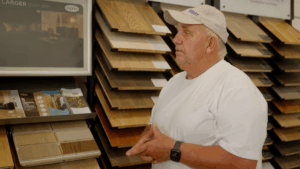
We carry both, including engineered and solid lines from Mirage, Mullican and Somerset. Come see them side by side in our Marcellus showroom, or learn about hardwood installation.
Talk to a Local Flooring Pro
Every home is different, and the best answer comes from someone looking at your actual floor. Crow Hill Hardwoods has been installing and refinishing floors across Greater Syracuse since 1992. Request a free, written estimate, call (315) 246-4425, or stop by the showroom at 2 W Main St in Marcellus, Monday–Friday 10am–4pm.