
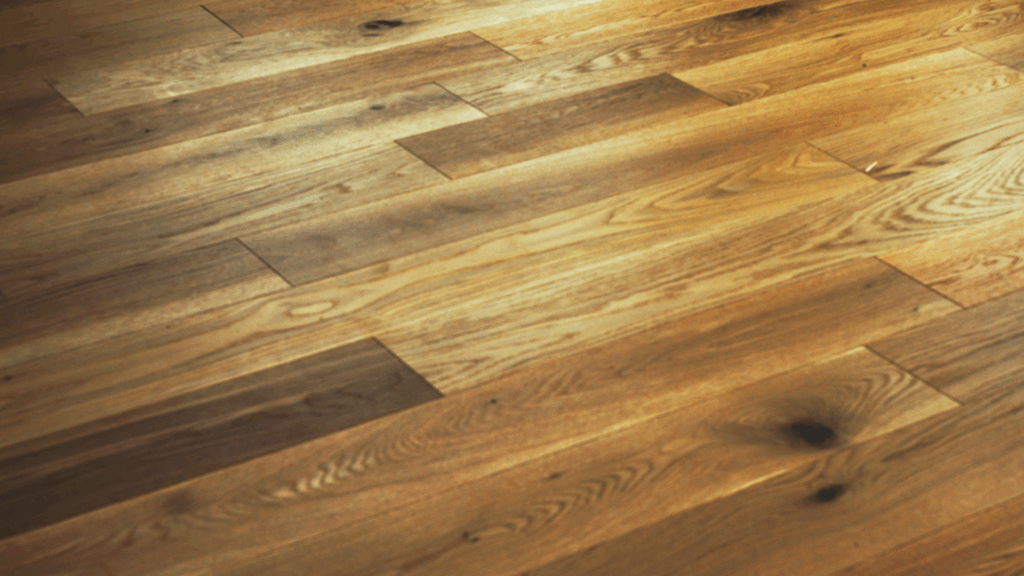
If your hardwood floors look tired — gray traffic lanes, scratches, a dated orange stain, or finish peeling at the kitchen doorway — the first question is usually whether to refinish or rip them out. In our experience across Syracuse, Marcellus and the surrounding towns, most floors can be refinished, and refinishing typically costs a fraction of installing new hardwood. But not always. Here’s how to tell.
Signs Your Floor Is a Good Candidate for Refinishing
- It’s solid hardwood. Most homes built before the 1980s in Central New York have ¾” solid oak or maple, which can be sanded many times over its life.
- The damage is on the surface. Scratches, dull finish, worn traffic paths and light stains live in the finish and the top sliver of wood — sanding removes them.
- The boards are flat and tight. Minor seasonal gaps are normal. Boards that lie flat and don’t move underfoot are good to go.
- You want a new color. Sanding to bare wood lets you go lighter, darker, natural or gray.
The Screen-and-Recoat Option
If your floor is dull and lightly scratched but the wood isn’t worn through anywhere, you may not need a full sand-down at all. A screen and recoat abrades the existing finish and adds a fresh coat on top. It’s faster and less expensive, and doing it every several years in high-traffic homes can postpone a full refinish for a long time. The catch: it won’t change the color or remove deep scratches, and it won’t bond over floors that have been waxed or treated with some polish products.
When Replacement Makes More Sense
- The wood is too thin. Floors that have been sanded many times can reach the tongue-and-groove. You’ll see exposed nail heads or tongues between boards. Pull a floor vent and look at the edge of a board to gauge how much wood is left above the tongue.
- Major water damage. Boards that are badly cupped, crowned, buckled or black with rot need to come out. Small areas can be patched; large ones may not be worth saving.
- Deep pet urine stains across large areas. Urine soaks into the wood and often goes deeper than sanding can reach. A few boards can be replaced; a whole room may point toward new flooring.
- It isn’t solid hardwood. Engineered hardwood with a thin wear layer may only tolerate one light sanding — or none. Laminate and vinyl can’t be sanded at all.
- The subfloor is the problem. Persistent squeaks, soft spots or bouncy areas mean the structure needs attention, which usually means lifting the floor.
How the Costs Compare
A full sand-and-refinish reuses the most expensive part of a floor — the wood itself — so it’s almost always less expensive than new hardwood, often by half or more. New flooring adds material, removal and disposal, subfloor prep, and installation labor. For current price ranges, see How Much Does Hardwood Floor Refinishing Cost in Syracuse?
Partial Repairs: The Middle Ground
Many floors fall somewhere in between: mostly sound, with a damaged area near a door, a patch where a wall was removed, or a spot where the dog had accidents. In those cases the best approach is to weave in new boards — removing damaged pieces in a staggered pattern and installing species-matched replacements — then refinishing the entire room so the repair disappears. This is common in older Syracuse and Auburn homes where radiators, chimneys or walls have moved over the years.
What About Hardwood Hiding Under Carpet?
If your house was built before about 1960, there’s a good chance there’s hardwood under the carpet. Lift a corner inside a closet or pull a heat register to peek. Tack strip holes, staples and pad residue are cosmetic and come out during refinishing. It’s one of our favorite surprises to deliver to homeowners — the floor they already own is often better than anything they’d buy new.
Questions to Ask Before You Decide
- How much wood is left above the tongue?
- Is the damage in the finish or in the wood?
- Are there boards that should be replaced before refinishing?
- What finish and sheen would suit how we live?
- How long will we be off the floor?
A good flooring contractor will answer all of these honestly — including telling you when refinishing won’t give you the result you want. Learn more about our hardwood refinishing service or our hardwood installation.
Talk to a Local Flooring Pro
Every home is different, and the best answer comes from someone looking at your actual floor. Crow Hill Hardwoods has been installing and refinishing floors across Greater Syracuse since 1992. Request a free, written estimate, call (315) 246-4425, or stop by the showroom at 2 W Main St in Marcellus, Monday–Friday 10am–4pm.