
Finishing a basement is one of the most popular projects in Central New York homes — and flooring is where a lot of them go wrong. Basements here sit on concrete slabs, stay cool, and deal with groundwater and humidity that swing with our wet springs and humid summers. The floor you choose has to handle that.
Why Solid Hardwood and Basements Don’t Mix
Concrete constantly wicks moisture up from the ground, even when it looks and feels dry. Solid hardwood absorbs that moisture, swells, and then cups, buckles or pulls away from the nails. Most manufacturers don’t warranty solid hardwood below grade for exactly that reason. It’s one of the few places we’ll tell a homeowner flatly: don’t do it.
Luxury Vinyl Plank: Usually the Best Choice
Rigid-core luxury vinyl plank (LVP) is our most common recommendation for basements:
- Waterproof planks won’t swell, warp or grow mold from moisture or a minor leak.
- Floating installation goes right over the slab with the proper underlayment or vapor barrier.
- Warmer and softer than tile, especially with an attached pad.
- Realistic wood looks that can match hardwood upstairs.
- Easy to lift and reinstall in many cases if you ever have a water problem that needs to be addressed.
Choose a product with a wear layer of around 20 mil or more if the basement is a playroom, gym or has pets. We carry COREtec and other luxury vinyl lines in our showroom.
Engineered Hardwood: Possible, With Conditions
Some engineered hardwoods are approved for below-grade installation because their layered core is far more stable than solid wood. They can work in a basement that is consistently dry, with a proper moisture barrier and a slab that tests within the manufacturer’s limits. If real wood downstairs matters to you, it’s worth a conversation — but it’s a more careful installation and less forgiving if water ever shows up. See engineered vs. solid hardwood.
What About Laminate, Carpet or Tile?
- Laminate — many laminates have a wood-fiber core that swells with water. Some newer water-resistant lines can work in dry basements, but LVP is the safer bet.
- Carpet — warm and soft but can trap moisture and odors if the basement ever gets damp.
- Ceramic or porcelain tile — waterproof and durable but cold and hard, and more expensive to install.
Before You Install: Check the Basement
- Look for water history. Stains on walls, efflorescence (white powder on concrete), or a sump pump that runs often.
- Test the slab. We use moisture testing to confirm the slab is within product limits.
- Control humidity. A dehumidifier keeping the basement around 50% relative humidity helps any floor, and your whole house.
- Check flatness. Floating floors need a flat slab; high spots get ground down and low spots filled.
Matching the Basement to Upstairs
A popular approach in Camillus split-levels, Baldwinsville new builds and Syracuse colonials alike: hardwood on the main floor, and a closely matched LVP in the basement and mudroom. From the stairs, it reads as one cohesive home — without the risk of wood below grade.
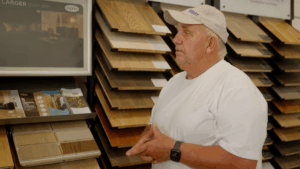
Learn about our LVP installation service or come compare samples side-by-side at our Marcellus showroom.
Talk to a Local Flooring Pro
Every home is different, and the best answer comes from someone looking at your actual floor. Crow Hill Hardwoods has been installing and refinishing floors across Greater Syracuse since 1992. Request a free, written estimate, call (315) 246-4425, or stop by the showroom at 2 W Main St in Marcellus, Monday–Friday 10am–4pm.